
How horror trailer music is built, act by act
How I structure a horror trailer cue in four acts, keep the impact big but the sound minimal, and build pace with my own recordings, drums and risers.
By Richard Pryn ·
Right, horror trailer music. It isn’t all giant hits and screaming. Almost all of my horror placements have come from my darker thriller tracks, because so much of horror is atmosphere.
Here’s how I put one together: the structure first, then how to get impact without clutter, then how to build pace.
Think in four acts
A trailer cue has four acts. There are rough lengths for each, but they’re not rules. Longer Act 1, shorter Act 3, whatever works for the track.
The thing most people miss is this: treat each act as its own little track, with a start, a middle and an end. At the end of each one, throw in a stop-down. It doesn’t have to be total silence. You can keep effects and rises going through it. You’re changing gear into the next track.
Act 1: set the scene
Start simple. One note is enough. A breath with loads of reverb is enough. Leave space between the notes and let the cue breathe.
For tonality, we’re almost always going minor. Ask yourself: what’s the least I can do to create the horror vibes? Boom, that’s Act 1.
Act 2: pace and build
Now something starts to happen. The family has just moved into the haunted house and seen their first ghost.
Bring in an element of pace. A ticking clock, sticks, a pizzicato string going do-do-do-do-do. Then add layers, risers, clustered voicings and doubled rhythms. You can split Act 2 into a smaller build and a more powerful one if you like.
Act 3: make it feel huge
Open out your layers to span the very top and the very bottom of the frequency range. Think of it as a musical explosion. Big hits and sub-heavy bass do most of the work here, then you layer your creepy signature sounds on top.
Act 4: the exclamation mark
Hammer home the root note, your signature sound, your ident. Picture the family being chased by zombies down a dark corridor. The music should feel like it’s building almost painfully.
Hold the tension one bar longer
At the end of Acts 3 and 4, build into a held final or penultimate chord. It doesn’t have to be a chord, either. A really dissonant interval works, or your rhythms and risers reaching their peak.
Then ask: can I add a bit more? Copy and paste that last bar and let the riser rise for one more bar. It works so well, and it makes the stop at the end of the act hit even harder.
Big impact, minimal sound
How do you keep it minimal but still impactful? Ask what impact actually is. It comes from a few things together:
- Loudness, especially against quiet. Something loud sounds louder after silence.
- Size: a big drum, big strings, big brass. Lower sounds tend to carry more weight.
- A tail: reverb, or the natural decay of the sound, so you get a sense of scale and space.
- A broad spectrum: something subby, oomfy, punchy, clicky, smashy, cracky and tingly, all at once.
That last one is why trailer hits exist. They’re everything happening at the same time. So use them. A good hit does a huge amount of the legwork. A library with stings and jumpscares, like Psychosis, saves you building every hit from scratch.
The hit gives you impact. What makes it horror is what you decorate it with.
Decorate the hit with found sound
Most horror sounds are everyday objects. In the course I record myself tapping a little glass pot with a stick, then scoop out the EQ so the smash comes through, normalise it, chuck it into a big gothic church reverb (Logic’s Space Designer) and compress it to death.
Other things that work:
- Scrunched paper as a pre-hit before a big hit. It’s a winner. “How did you do that?” “I used the office supplies.”
- An elastic band on a tin if you don’t own a string instrument.
- Muted, scraped and plucked strings, recorded close.
Keeping it close and familiar is a quick way to keep it minimal. You want the big hits to feel odd and unnatural, which is ironic, because everything we’re using is natural.
Swap between two or three different hits, and keep Act 1 hits lower and simpler.
Your signature sound is your best tool
On my track Jester, for an Elephant Music album called Red Moon, the signature sound was breaths. I messed them up until they sounded like screams, then gave them space with reverb. My daughter and her friends were chatting outside my studio door, so I asked them in to scream. Into a big space they went, with some compression.
Then it was layer, change the layer, and keep growing it. Breaths into a cheap mic through some reverb are such a quick win.
Here’s why that matters. The big ending of a track might get used for one or two seconds at the end of the trailer. But if you give the editor an atmosphere, a signature sound and an interesting build, you can land the first two thirds of the trailer, if not more.
Build pace from your own sounds
In the Dark Thriller lessons I take a signature sound and chop it up into pulses. That’s it. A few things I do every time:
- Pitch it. Up two octaves, or down one. Something odd turns up, like “a strange dying bird”.
- Make a bass line from your voice. Record a rhythmic “wow wow wow”, put it through a pitch shifter down an octave at 100% mix, then add distortion.
- Spread it out. Double a part and send one copy about 45 degrees left and the other 45 degrees right with a direction mixer, EQ each one differently.
- Bring in a new sound when you start to lose patience. If it’s been 30 seconds and nothing new has arrived, it needs something. Often that’s an old sound heard in a new way.
Write in blocks, too, so editors can easily cut it up to fit their picture.
Double it up
This is the classic way to make a cue feel more urgent: hear things more often. On Wicca, the track used in The Lodge trailer, I got three cellos and a double bass to mute their strings and swipe them in an insanely simple rhythm. I distorted it like bonkers until it sounded like a distant war drum. Then, rather than repeating the riff every eight bars, I went to every four.
Under it I hot-miked a single cello, with the mic so close it almost clips. The parts that got used were the intro and second act, because they paint the picture straight away.
Drums: simple rhythms, many layers
When the drums come in, I think in five elements: sub, low, mid, high and sticks. A cinematic percussion library such as Damage 2 covers a lot of that range.
- Start with rolls. They’re a dramatically overlooked way to add build. Make them long, and use them as markers to introduce each new element.
- Add sticks in a simple pattern, like a heartbeat or a clock. Half-time them in places.
- Layer, don’t complicate. Layering is the biggest tool you have for pace and build. Add syncopation to keep it interesting.
- Run a straight rhythm against a more dynamic one. They play off each other.
- Speed up towards the end with faster rhythms, more risers and a few big hits.
For a long build, a riser of about a minute works. I stack low, mid and high versions an octave apart.
One of my favourite endings is a bonkers, very short final act. Change the rhythm and make it feel faster and manic, like a chase scene.
Wrapping up
Horror trailer music comes down to four acts that each feel complete, hits decorated with your own weird sounds, and builds made from simple layers that arrive more and more often. It doesn’t need to be tidy. Wicca’s session is a mess and I was clipping like bonkers, but it gets placements because every sound matters. Think of a simple riff, record yourself playing it in different ways, and see how far you can build it.
Happy composing! Rich
Tools mentioned in this guide
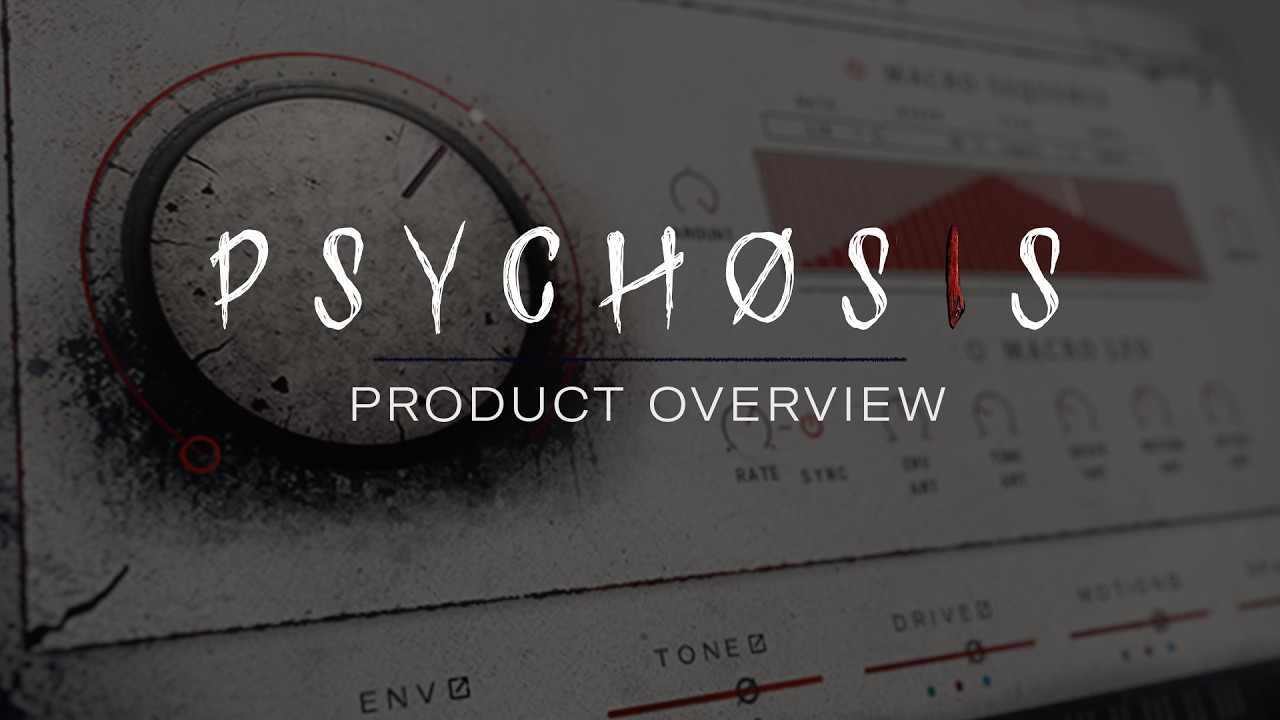
Psychosis
A Kontakt Player instrument for thriller and horror scoring with 720 sources (including 324 jumpscares and stings, 144 tempo-synced atonal rhythms, 120 sustains and textures) and 332 presets across two engines, Psychosis Designer and Psychosis Menu.

Damage 2
A cinematic percussion library with 41,395 samples from 1,596 sources and 208 presets, split across three engines: Ensemble Designer (700+ sources, five mic positions), Kit Designer (16-voice kits, 50+ kits) and Loop Designer (864 tempo-synced loops).
Get the next guide by email
Get Richard's free horror sample pack, Flesh & Bow, by email.
Get the free sample pack →